
Below is a list of this year’s greatest mobile traffic statistics and a brief history of mobile internet. To understand how to optimize your site’s performance, explore website visitor behavior analysis techniques. These strategies provide insights into user engagement, helping businesses tailor content and improve conversion rates. By analyzing this data, companies can make informed decisions that enhance user experience. To further understand user behavior, consider how to use ga4 traffic reports to track your online initiatives. These detailed insights help businesses identify trends in traffic sources and user interactions. As a result, you can develop more targeted marketing strategies. Integrating this data into your decision-making process can boost your website’s performance and user satisfaction.
The first generation (1G) of mobile connectivity was introduced in 1979 in Tokyo, Japan. Nippon Telegraph and Telephone (NTT) launched this technology.
1G had poor coverage. Because different systems used different frequencies, compatibility between operators was not possible.
2G launched in 1991 in Finland with transfer speeds of 9.6 kilobits per second. Improvements led to download speeds of 500 kilobits per second by the time 3G launched in 2001 by NTT DoCoMo.
3G provided data transfer speeds up to 4 times faster than 2G systems.
Today, big telecom companies compete to lead in 5G. Greater bandwidth provides faster download speeds for consumers.
Lower latency from 5G will enable edge computing solutions for enterprise.
Over half of all internet traffic now comes from mobile devices. Understanding and optimizing for mobile users has become essential for businesses aiming to stay competitive.
Mobile traffic will continue to grow, with 70% of the global population having connectivity by 2023. To capitalize on this trend, businesses must focus on organic traffic strategies that enhance user engagement and drive conversions. Effective content marketing and SEO techniques will be crucial for attracting and retaining visitors. Additionally, optimizing for mobile experiences can leverage this growing connectivity.
Mobile traffic speeds will outpace fixed line competitors over the coming years. Speeds are expected to triple to under 44 megabits per second. 5G will exceed 575 megabits per second.
Half of all clicks on paid search ads occur through mobile devices. Mobile traffic has overtaken desktop traffic in recent years.
63% of Google’s traffic comes from mobile devices.
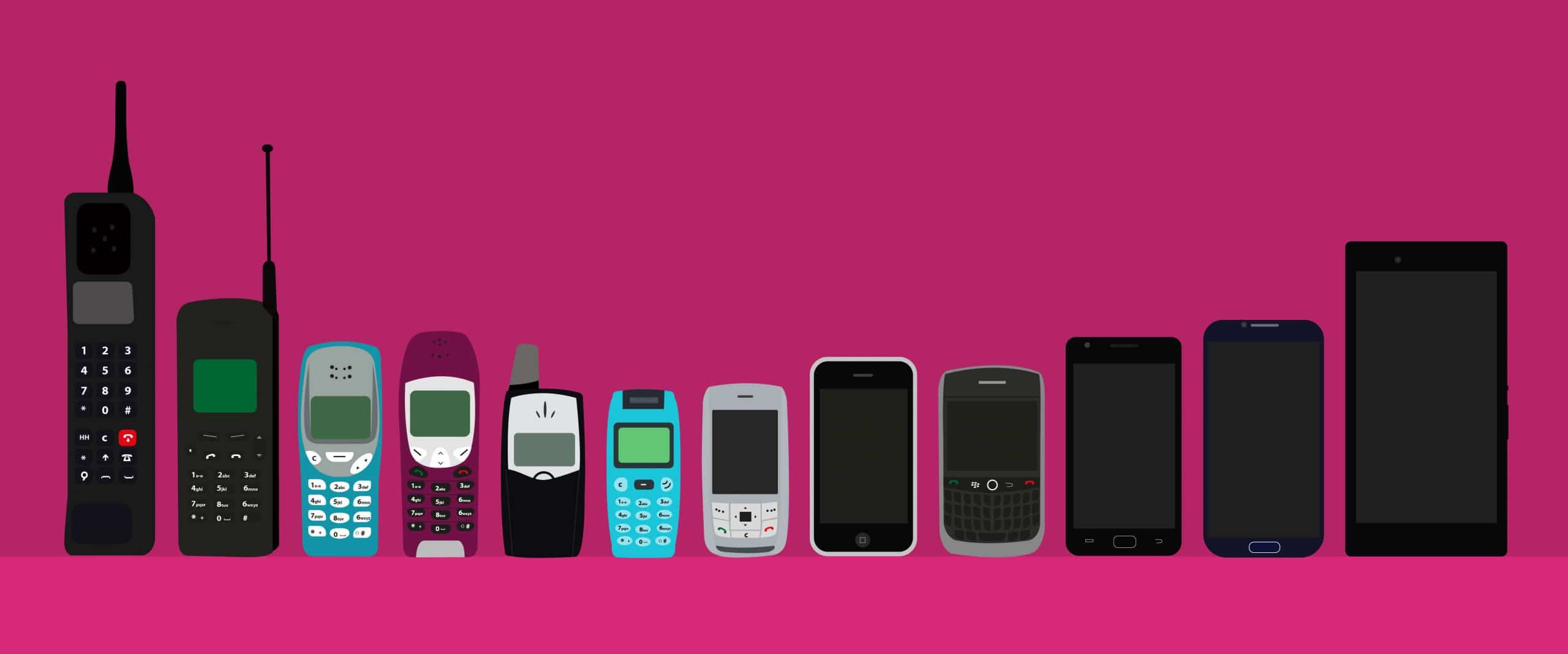
The history of mobile internet spans from 1G to the deployment of millimeter wave 5G technology in 2019.
The number of people in the United States using only mobile devices to access the internet is expected to reach over 52 million in 2021.
Mobile Traffic Stats
- Approx. half of all traffic on the internet is from the use of mobile devices. [Source]
- Mobile traffic is currently over 30 exabytes a month. [Source]
- Of all the traffic driven to Google, 63% is from a mobile device. [Source]
- Yahoo only gets less than half their traffic from mobile devices. [Source]
- 62% of global internet users use a mobile device to access the internet. [Source]
- In Africa over 60 percent of internet traffic is from mobile device use. [Source]
- In the US only 40 percent of internet traffic time coming from mobile devices. [Source]
- In 2020 it is expected that over 3.5 billion people will access the with a smartphone. [Source]
- Indonesian smartphone users spend 90% of their digital lives on a smartphone. [Source]
- The demand for mobile ad blockers continues to increase 90% year on year. [Source]
History of Mobile Internet
Here is a brief outline of the history of mobile internet.
- 1G Technology is launched
- First Digital Transmission (2G)
- First Mobile Phone With Internet
- First Mobile Web Browser
- First Mobile Web Service
- First WAP Forum
- 3G Released
- 4G Released
- Mobile Traffic Soars
- 5G Starts Development
1979
1G Technology is launched
1G, the analogue mobile connectivity technology, was launched in Japan. [Source]
1991
First Digital Transmission (2G)
Mobile data was transmitted over the digital 2G GSM network for the first time in Finland. [Source]
1996
First Mobile Phone With Internet
The Nokia 9000 Communicator was the first mobile device with internet access. [Source]
First Mobile Web Browser
NetHopper was the first commercial mobile web browser. [Source]
First Mobile Web Service
The first commercial ‘mobile web’ service was offered in Finland. [Source]
1997
First WAP Forum
Nokia, Ericsson, Motorola and Unwired Planet founded the WAP Forum to harmonize mobile web standards. [Source]
2003
3G Released
3G provided up to 4 times the bandwidth of 2G networks. [Source]
2013
4G Released
4G offered transmission rates up to 84 megabits per second. [Source]
2014
Mobile Traffic Soars
Mobile internet usage overtook desktop use. [Source]
2019
5G Starts Development
5G began deployment using millimetre wave frequencies. These are faster than 4G, offering real world download speeds up to 2 gigabits per second. [Source]
Interesting Facts & Statistics about Mobile Traffic

- The overall 5G speed record goes to Ericsson, using millimeter waves, at 4.3 Gigabytes per second in their Stockholm Research and Development Labs. [Source]
- Ericsson also used advanced beam-forming and beam tracking, using 5G technology to download 3.67 Gigabits per second in a car travelling 170 kilometres per hour. [Source]
- The 4G Mobile Internet download speed record goes to Finnish Internet Service Provider Elisa who, in 2016, downloaded at a rate of 1.9 Gigabits per second using Huawei Technology [Source]
- There are over 3.5 billion unique mobile internet users. [Source]
- Nigeria has the highest proportion of internet traffic from mobile devices. [Source]
- The average amount of time a Mobile Internet user spends on their smartphone is 2 hours 55 minutes. [Source]
- The amount spent on Mobile Internet Advertising is predicted to be over $280 billion by 2022. [Source]
- Right now, over half of all clicks on paid search ads is accounted for by mobile internet use. [Source]
- These clicks are lower value – with Cost Per Click (CPC) down a quarter compared to desktop. [Source]
- Click Through Rates (CTR) are higher for mobile internet users however – up 40% compared to desktop. [Source]
Mobile Internet Usage Stats 2021
What will happen with mobile internet usage in 2021?
52.3 million users in the United States are expected to access the internet only through mobile devices [Source].
Global mobile connectivity is expected to grow, reaching 70 percent of the population by 2023 [Source].
Fixed broadband speeds are expected to double in the next three years. However, mobile internet speeds are expected to triple to 43.9 megabits per second by 2023. 5G speeds will be 13 times higher than standard mobile connections, reaching 575 megabits per second [Source].
Got an interesting statistic or fact about mobile traffic that we have missed?
Drop a comment below!