
Trying to increase your organic traffic but not sure what it means? You’re not alone.
Understanding organic vs inorganic traffic matters for everyone. It doesn’t matter if you’re a blogger starting to monetize or a digital marketing specialist at a large company.
Search engine optimization (SEO) plays a crucial role in driving traffic to your website.
Even marketers who rely solely on advertising know the basics of organic vs inorganic traffic.
What Is Organic Traffic?
Organic search traffic comes from users who enter a search query and click on a website displayed in the search results. understanding organic search algorithms is crucial for improving visibility online. By optimizing content according to these algorithms, businesses can attract more relevant visitors. This approach can lead to higher conversion rates and better overall online performance.
Websites do not pay for organic search traffic. This is the biggest difference between organic and inorganic SEO.
Organic traffic is considered more valuable than inorganic traffic.
This is because the displayed websites are the best ones available for that search term.
Additionally, visitors are considered to have a more legitimate interest in the subject.
How do I get organic traffic?
Improve your position in Google by creating quality content that matches user intent.
How do bloggers get organic traffic?
By understanding their audience and creating content that readers want to read and share.
What Is Organic SEO?
Organic SEO is achieved by combining quality content with good keyword optimization.
When your website is full of informative blog posts that fit searchers’ intent, you will achieve organic search engine optimization.
What does that mean?
Other websites in your niche will naturally link to your content. Google loves to see this because it gives your site authority.
As a result, new links and higher domain authority mean a higher position in Google and more organic traffic.
What Is Inorganic SEO?
Inorganic SEO refers to optimization through paid strategies for your website.
These can include pay-per-click advertising (PPC) and paid social media advertising.
When you buy website traffic via PPC, a brand pays the search engine whenever someone clicks on their advertisement.
The most common form of PPC advertising is through the Google Display Network.
To set up a PPC campaign, a digital marketing expert must research keywords to target.
Afterward, they write text ads that display when users search for that keyword.
If you want to run paid advertisements, I recommend using a platform such as SEMrush or Spyfu. These tools let you view your competitors’ ads and copy what works.
SEMrush are currently running a free trial for new users.
What Is SEO?
That’s a big question and one best answered in our 7000 word back to basic SEO guide.
In short, it’s making sure your website complies with Google’s guidelines and matches user intent.
Benefits of Organic SEO
Users frequently see organic results as more trustworthy than paid ones. In fact, one-third of internet users skip paid results in favor of the first organic result.
Another benefit of organic SEO is that there is no direct cost associated with it.
Improving your website’s organic SEO increases brand awareness and improves your company’s credibility at the same time.
Google displays websites higher in search rankings based on trustworthiness. As a result, users assume that if you’re ranked highly by Google, you can be trusted by them as well.
Benefits of Inorganic SEO
You must be wondering why anyone would pursue inorganic SEO if organic SEO is free and brings better traffic.
However, there are two sides to the coin. Inorganic SEO has its own benefits.
Inorganic SEO provides results much more quickly than organic SEO, even though it costs more.
Organic SEO is a slow procedure and can take months before your keywords start ranking. With inorganic SEO, you can create and execute a campaign in days.
Another benefit has to do with the placement of advertisements.
Even though many people ignore ads in favor of organic results, they still see your company name. This helps increase brand awareness.
Finally, companies selling products can take advantage of Product Listing Ads (PLAs).
This is a Google Display Network feature where companies can show pictures and prices of relevant products.
Not only that, but a user who clicks on a PLA is brought directly to a purchase page.
Inorganic vs Organic SEO
There’s no black and white answer to this question. It depends on your business.
Before choosing between organic versus inorganic SEO, consider some internal and external factors.
- Marketing Budget
- Marketing Goals
- Competition
- 7 Day Trial of PRO subscription + Traffic Analytics
Marketing Budget
A limited marketing budget may mean you lack resources for an inorganic SEO campaign.
For companies in this position, pursuing organic SEO makes more fiscal sense than taking money from other areas.
That said, you can run an inorganic campaign for less than $20 per day.
This campaign will have limited reach. However, it gives you access to tools for testing website CTAs and tracking user behavior.
Marketing Goals
Your marketing goal may be driving traffic and brand awareness. This is common for companies selling products traditionally bought in person or those that don’t sell products at all.
If this is the case, inorganic SEO campaigns may cost more than the benefits you reap.
On the other hand, if you can drive high-value sales for a low cost-per-click, inorganic SEO will effectively drive traffic and increase sales simultaneously.
Competition
Not all advertisements are equal and neither are all CPC rates.
Consider not just the level of competition in your industry but the cost of competing as well.
As a digital marketing expert, you should be well versed in your chosen keyword research tool.
Use this tool to find keyword popularity and search volume for terms relevant to your company.
Look for keywords with low competition and high search volume for your inorganic SEO campaigns.
In popular industries, the first search results page will be heavily saturated by dominant companies.
For example, if you’ve developed a new furniture line, you’ll struggle to compete against Ikea and Crate & Barrel.
You also need to consider CPC costs in your industry.
For example, the keyword “leather sofa” has an average CPC of $3.00.
A more specific long-tail keyword like “black leather sectional sofa” costs just $1.60.
Two Strategies Are Better Than One
A savvy digital marketing expert will craft a strategy combining organic SEO and inorganic SEO.
With an integrated SEO campaign, you can take advantage of both strategies’ benefits.
When prospective clients see Google has given you a high organic ranking, it gives credibility to your inorganic SEO efforts.
Additionally, you benefit from using Google Ads analytics to improve both your organic and inorganic SEO strategies.
Combining both strategies provides a two-fold financial benefit. It comes down to return on investment for your marketing dollars.
With a combined strategy, your website receives more traffic than using one strategy alone.
There is also a limit to the number of keywords you can organically target.
Targeting keywords for every article on your company’s website isn’t feasible.
With inorganic SEO, you can monitor keyword performance and create your organic strategy accordingly.
View Your Competitors Organic Traffic
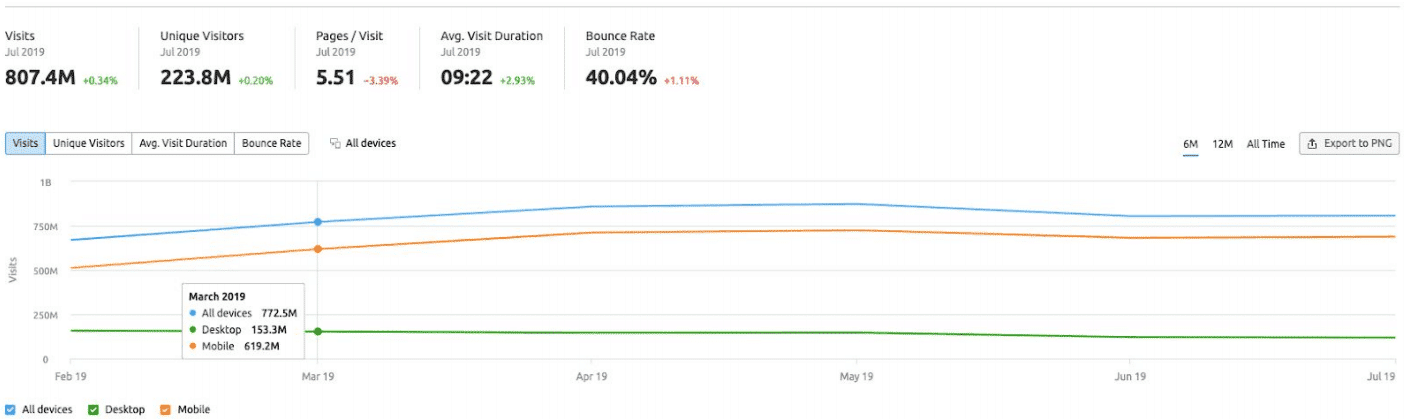
Competitor insights greatly improve your chances of increasing organic traffic.
Platforms such as SEMrush make it easier than ever to audit your website and compare it to those outranking you.
⬇️ FREE GIVEAWAY ⬇️
7 Day Trial of PRO subscription + Traffic Analytics
Cancel At Any Time!
Final Thoughts
Google algorithms have made it increasingly difficult for new businesses to rank highly unless they target a niche market.
Using both inorganic and organic SEO is the best way to show Google your website deserves a high ranking.
But it’s certainly a lot of work!
That’s where we come in.
We can help your business with targeted traffic from the right demographic. Contact us today to learn more. Understanding mobile usage statistics for 2023 will enable you to tailor your marketing strategies effectively. As more consumers turn to smartphones for information and shopping, leveraging this data provides a competitive edge. Let us guide you in optimizing your approach to maximize engagement and conversions.
Disclosure: This post may contain affiliate links, which means that if you click on one of the product links, I’ll receive a small commission with no additional cost incurred to you.