
What Is Generative Engine Optimization (GEO)? A Practical Guide for 2026
Generative Engine Optimization (GEO) is the practice of optimising your content so that AI-powered platforms cite your website when answering user questions. These platforms include ChatGPT, Google AI Overviews, Perplexity, and Claude. Unlike traditional SEO, which targets a ranked list of links, GEO targets the AI-generated answer itself.
In 2026, GEO is one of the fastest-growing areas in digital marketing. Most sites haven’t started yet, so the opportunity is still early. A sitemap tool is essential for ensuring that all your content is easily accessible to these AI platforms.
By properly structuring your website with an effective sitemap, you can enhance its discoverability and relevance in AI-generated responses. This proactive approach is key to staying ahead in the competitive landscape of generative engine optimization.
What Is Generative Engine Optimization, Exactly?
AI platforms generate direct answers instead of showing a list of links. When someone types a question into ChatGPT or Perplexity, the platform pulls from sources it deems trustworthy, authoritative, and clearly written.
GEO is the discipline of becoming one of those trusted sources. It means structuring your content so that AI systems understand it, trust it, and choose to cite it when constructing their responses.
You may also see it called Answer Engine Optimization (AEO), LLM Optimization (LLMO), or AI Search Optimization (AIO). Different names, same idea: get cited in AI-generated answers, not ranked in traditional search.
How Is GEO Different From Traditional SEO?
Traditional SEO and generative engine optimization share the same goal — getting your content in front of searchers. However, they work very differently.
With SEO, you’re optimising for Google’s algorithm: backlinks, keyword placement, page speed, meta tags. The output is a ranked position in a list of ten blue links.
With GEO, you’re optimising for how AI systems synthesise information. The output isn’t a ranking — it’s a citation inside the AI’s answer. The user may never click a link at all.
Here’s what changes:
- Content format matters more. AI systems prefer clear definitions, direct answers, and Q&A structure.
- Topical authority matters more. AI platforms don’t reward thin content. They cite sources that cover a topic thoroughly and consistently.
- E-E-A-T signals carry more weight. Author credentials, citations, and factual accuracy influence AI trust.
- Traditional ranking signals still apply. Domain authority, backlinks, and technical SEO are the foundation — GEO builds on top.
GEO doesn’t replace SEO. It extends it. A site with no SEO foundation won’t get cited by AI systems either. However, a site with solid SEO that also applies GEO principles is positioned to capture both channels.
Why Does GEO Matter So Much in 2026?
The numbers make the case clearly. Over 60% of Google searches now trigger an AI Overview before a user sees traditional results. ChatGPT processes over 1 billion queries per day. Perplexity’s user base grew 600% year-over-year in 2025.
More importantly: AI referral traffic grew 527% year-over-year in the first five months of 2025, according to Previsible’s AI Traffic Report. That’s not a trend to monitor — that’s a shift already underway.
For many informational and research queries, the AI answer is the final destination. The user reads the response, gets what they need, and leaves. If your brand isn’t cited in that answer, you’re invisible for that query — even if you rank #1 in traditional search.
Most brands are still focused entirely on traditional SEO. As a result, competition in AI citations is still relatively low. Early movers are capturing citation share right now while it’s still accessible.
Which AI Platforms Should You Optimise For?
Each platform has different citation patterns. However, a few are worth prioritising in 2026:
Google AI Overviews — Appears for the majority of informational searches. Heavily influenced by existing Google authority, structured content, and E-E-A-T signals. If you rank well in Google, you’re already partway there.
ChatGPT Search — Launched in late 2024. Favours authoritative, well-cited sources. Research shows Wikipedia accounts for nearly 48% of ChatGPT’s top cited sources. This means factual accuracy and clear sourcing matter significantly.
Perplexity — Processes over 780 million queries monthly. Skews toward recently published content and community-validated sources. Fresh, specific, well-structured articles perform well here.
Claude and Microsoft Copilot — Growing rapidly in professional contexts. Tend to favour structured, expert-level content with clear author attribution.
What Are the Key GEO Ranking Signals?
Researchers at Princeton University and IIT Delhi identified the content signals that most consistently improve AI citation rates. Their findings show that applying structured GEO techniques can boost AI visibility by up to 40%.
The top signals are:
- Direct, concise answers at the top of the page. AI systems scan for the clearest answer to a query. Put your core answer in the first paragraph — not buried three screens down.
- Q&A and header structure. Organise content around questions people actually ask. H2s that mirror real queries perform better than generic section titles.
- Cited statistics and data. AI platforms prefer content that references verifiable data. Include specific numbers with sources.
- Topical depth, not breadth. A 1,500-word article that fully answers one question outperforms a 3,000-word article that skims ten topics.
- Author and brand authority signals. Bylines, author bios, and consistent publishing history contribute to trust.
- Schema markup. FAQ schema, Article schema, and HowTo schema help AI systems parse your content structure.
How Do You Actually Optimise for GEO? (Practical Steps)
Here’s what to do, starting this week:
1. Audit your existing content for direct answers. Take your top 10 pages and check: does the first paragraph answer the target question directly? If not, rewrite the opening. AI systems look for the clearest answer first.
2. Restructure headers as real questions. Change “Our Process” to “How Does [Topic] Work?” Change “Benefits” to “Why Should You [Do X]?” Match how people actually query.
3. Add data and citations. Replace vague claims with specific, sourced numbers. AI systems trust specificity and verifiable facts.
4. Build topical authority systematically. Don’t write one article about a topic — write five. AI systems develop a sense of which sites own a topic. Consistent, thorough coverage signals authority.
5. Add FAQ sections. These map directly to how users query AI platforms. A well-written FAQ at the end of an article is low-effort, high-impact for AI citations.
6. Implement schema markup. FAQ schema and Article schema are the most immediately useful. Most WordPress SEO plugins (Rank Math, Yoast) make this straightforward.
How Does AI Traffic Fit Into a GEO Strategy?
You can measure and test your GEO readiness before organic AI citations start arriving. Here’s the piece most GEO guides skip entirely.
AI referral traffic appears as a distinct traffic source in GA4. These are visits from ChatGPT, Claude, Gemini, and Perplexity. If you’re applying GEO principles but seeing zero AI referral traffic, that’s diagnostic. It means either your content isn’t being cited yet, or your GA4 tracking isn’t capturing it.
Traffic Masters is one of the few providers that offers AI-sourced traffic — real sessions from AI platforms. This helps you validate how your pages perform when AI-referred visitors land on them. While you’re building organic AI citation authority (which takes time, like SEO), you can use targeted traffic to understand your audience’s behaviour. You can also optimise conversion paths before organic volume scales.
If you’re testing new GEO-optimised content and want to see how it performs with real visitors, you can buy website traffic to accelerate that feedback loop.
How Do You Measure GEO Success?
GEO measurement requires a different approach than traditional SEO. There’s no “position 1” to track.
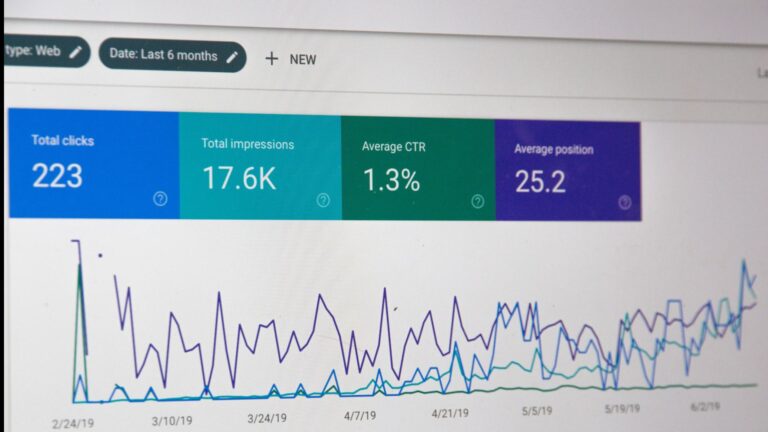
AI referral traffic in GA4 — Set up a custom segment for sessions from ChatGPT, Perplexity, Claude, and Gemini. These typically appear under referral or direct. Monitor month-over-month growth.
Manual citation checks — Regularly query your target questions in ChatGPT and Perplexity. Note whether your content appears and how it’s cited. Screenshot and track over time.
Brand mention monitoring — Tools like Mention or Google Alerts will surface when your brand is referenced in AI-adjacent contexts. These include articles about GEO and AI search discussions.
Branded search growth — When AI systems mention your brand in answers, branded search typically increases. Track this in Google Search Console as a secondary GEO signal.
Should You Prioritise GEO Over SEO Right Now?
No — but you should be doing both. Traditional SEO is still the foundation. Without domain authority, quality backlinks, and solid technical health, AI systems won’t trust your content regardless of how well-structured it is.
The practical approach for 2026: continue your existing SEO programme, then layer GEO practices on top. Rewrite content openings to lead with direct answers. Add FAQ sections to existing high-traffic pages. Start building topical authority in your core subject area.
The sites that move earliest on generative engine optimization will own citation share in their niches before competition increases. That window is still open in 2026 — but it won’t stay open indefinitely.


![Website Traffic Analytics Guide: Tracking and Growing Your Site [2026]](https://www.traffic-masters.net/wp-content/uploads/2026/02/ChatGPT-Image-Feb-16-2026-09_57_42-AM-768x512.png)